A practical guide from the team at Epic Pavement, a Prince George-based pavement and snow removal contractor.
Commercial snow removal in Prince George, BC — Epic PavementTable of Contents
Opening Scene
What Goes Wrong, and What It Actually Costs
What You're Actually Up Against in Prince George
The City Clears Roads. You Clear Everything Else.
The Three Jobs: Plowing, Sanding, Hauling
Plowing
Sanding
Hauling
How Commercial Snow Contracts Actually Work
What We Walk Through on a Pre-Season Site Visit
A Note for Residential Property Owners
How Epic Pavement Works
Frequently Asked Questions
Local Resources and Sources
It's 7 a.m. on a Tuesday in February. You manage a 40-stall retail strip on Highway 16. About 25 centimetres of snow fell overnight. Your tenants opened their stores at six and the parking lot looks the same way it did at midnight. The sidewalk to the front entrance is buried. Two customers have already turned around in the driveway. Your phone has six missed calls — your contractor isn't picking up any of them.
If you've spent a winter managing commercial property in Prince George, you know that morning. Maybe it didn't happen to you, but it happened to someone you know. And the lesson everyone takes from that morning is the same: snow removal in this city is not the kind of thing you can sort out with a handshake in November and forget about. It's an operational program. It runs five months. And the difference between a contractor who treats it that way and one who shows up when they feel like it is, on the wrong morning, the difference between a regular Tuesday and a slip-and-fall claim.
This guide is mostly for people who run businesses, manage commercial properties, or sit on stratas in Prince George. There's a section near the end for homeowners — the underlying logic is the same, just at a smaller scale — but the heart of this is for property managers who are tired of guessing and want to actually understand how this work gets done up here.
We're Epic Pavement, a locally owned pavement and snow removal contractor based right here in Prince George. We provide snow removal in Prince George, BC for commercial and residential properties, and what's below is the same conversation we'd have with you on a pre-season site walk, written down.
What goes wrong, and what it actually costs
Let's start with the part that most contractors skip past: the cost of getting this wrong is not the cost of the snow service. It's the cost of the things that happen when the snow service fails.
A slip-and-fall claim is the obvious one. According to WorkSafeBC, slips, trips, and falls are the costliest workplace incidents in British Columbia, costing employers an average of 440,000 lost workdays and more than $148 million in claim costs every year. WorkSafeBC also notes that during winter months, icy and wet conditions contribute to an 11 percent increase in slip-trip-and-fall injuries. Those numbers are at the provincial scale, but they roll downhill: every one of those claims started with a specific lot, a specific surface, a specific decision someone made that morning to either send a sander out or not.
That's the safety side. There's also the operational side, which property managers feel every day:
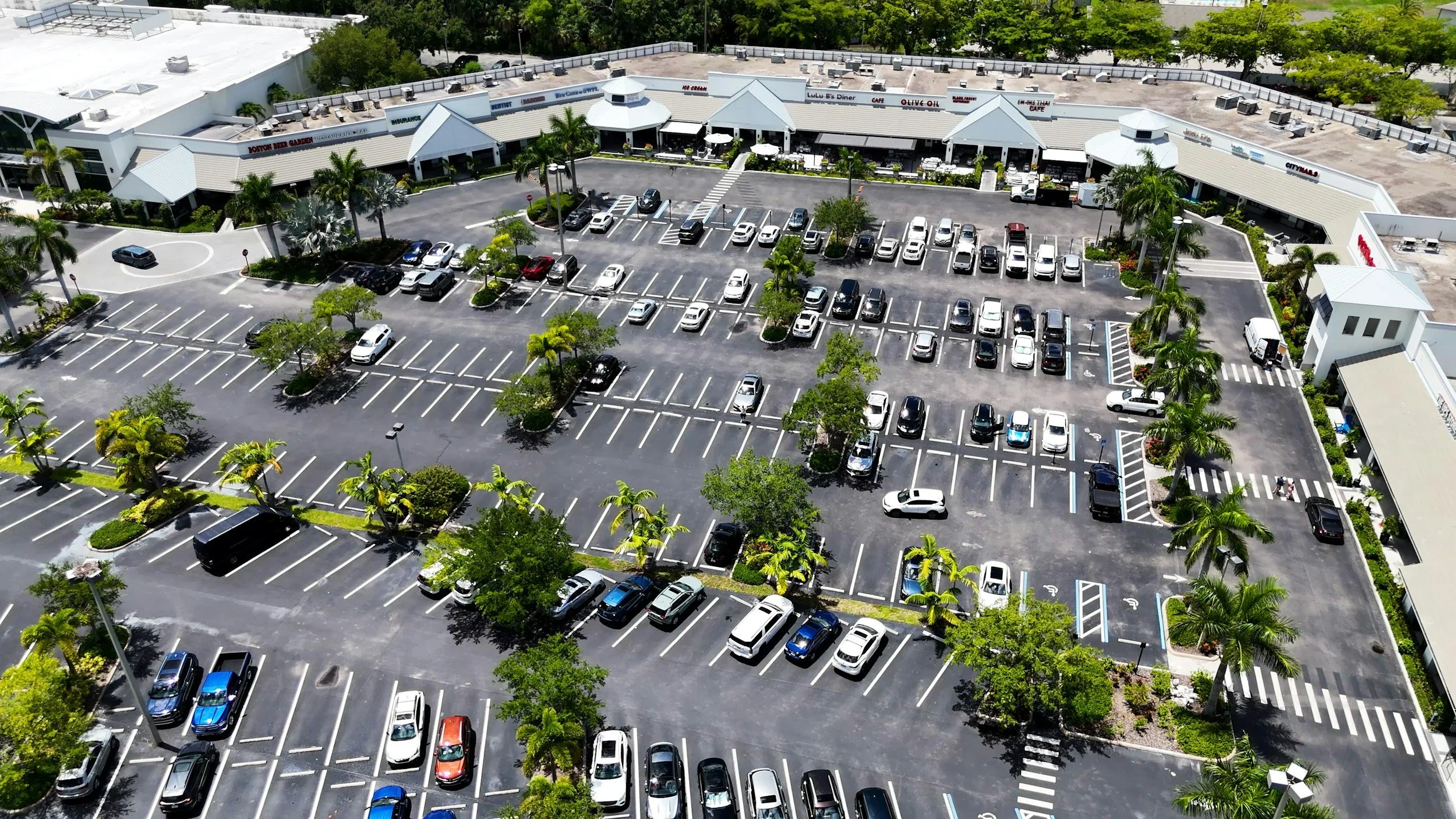
Your usable footprint shrinks. A 60-stall lot in October is functionally a 50-stall lot by mid-February if perimeter snow banks have been allowed to grow into the parking aisles. That isn't a hypothetical — we see it on commercial properties every winter.
Your sightlines disappear. Banks at the corners of exits become a vehicle-pedestrian risk and a real liability if a delivery truck hits a customer they couldn't see.
Your tenants notice. Retail tenants on a poorly-maintained lot will tell you about it. Industrial tenants who can't get a 53-foot trailer to the loading dock will tell you about it louder.
Your customers don't tell you. They just go somewhere else.
And in March, all of it melts. A winter's worth of snow piled at the property edge is a winter's worth of meltwater you'll be dealing with, regardless of where you wanted it to drain.
This is the framing that separates a property manager who's been through a few PG winters from one who hasn't: snow removal is a risk-management line item, not a janitorial expense.
What you're actually up against in Prince George
Three numbers shape every decision in this category, and all three come straight from the City of Prince George's own published operations.
The City's "snow event" threshold is 7.5 centimetres in 24 hours. Below that, the City folds snow into normal winter operations. At or above that, plowing fleets get mobilized for priority routes once the snow stops falling.
A "heavy snowfall declaration" is 20 centimetres in 24 hours. This is the threshold that shifts the City's nighttime clearing in the Downtown Central Business District to start an hour earlier, and that extends snow-removal completion times by 24 hours for every additional 8 centimetres beyond the initial 20. Source for both: the City of Prince George Snow Clearing page.
The City has issued multiple heavy snowfall declarations in a single month. In February 2023, CBC News reported Prince George issued three heavy snowfall declarations inside one month, with the City's roads and fleets manager describing crews moving 350 to 400 loads of snow per night to two municipal "snow dumps" just to keep priority routes open. That's the City running a wartime-scale operation. Now imagine you're trying to keep a 60-stall commercial lot useable that same week with no plan in place.
The honest takeaway: a normal Prince George winter has stretches when the snow comes faster than anyone can move it. A heavy winter has weeks of those stretches strung together. Anyone telling you otherwise either hasn't worked here long, or is selling you something.
The City clears roads. You clear everything else.
This is the part that surprises new property managers — and we've watched out-of-province operators learn it the hard way. The City of Prince George operates a three-tier priority system:
Priority 1 (red): arterial roads, the Downtown CBD, the Hospital District, major facility entrances, City off-street parking. Cleared within 48 hours after snowfall ends if at least 7.5 cm has accumulated.
Priority 2 (green): collector roads, priority hills, commercial and industrial zoning, transit routes not in Priority 1. Same 48-hour standard.
Priority 3 (grey): residential roads, designated sidewalks, minor facility entrances, park pathways. Cleared within 72 hours after Priority 1 and 2 are finished.
You can check your street's priority on the City's snow clearing map. What you'll quickly notice: your private parking lot is on none of those tiers. The City says it directly on its own page — "We don't clear sidewalks that are not part of a major pedestrian area." Translation: whatever's happening on your property in winter is your problem, not the City's. The City's own crews are working a 935-kilometre infrastructure network, and even on a perfectly executed response, your residential street is being cleared after the arterials.
This sounds obvious until you're sitting in a December meeting with a building owner who genuinely thought "the City handles snow" and has not allocated a single dollar for private property snow service.
One more thing the City does require of you
Under Property Maintenance Bylaw No. 8425, Section 8(2), every property owner or occupier in Prince George is required to:
"remove all accumulations of snow and ice from all footpaths and sidewalks on and adjoining the Land of that Owner or Occupier within 4 days of the snow or ice accumulating."
It applies to commercial and residential property alike.The maximum penalty under Section 22 is up to $10,000, with each day of continuing offence a separate offence. Most enforcement happens at much smaller scales than that — bylaw officers generally work toward compliance before penalties — but the four-day rule isn't a guideline. It's a legal obligation, and for commercial property it's the kind of detail that matters if a slip-and-fall claim ever ends up in front of a court asking whether reasonable maintenance was performed.
The practical implication: when you scope a snow service contract, the sidewalks adjoining your property — including the public sidewalk that fronts your building — need to be in scope. Not just the parking lot.
The three jobs: plowing, sanding, hauling
We talk to property managers who think snow removal is one service. It's three. They're priced differently, scheduled differently, and triggered by different things, and the most common reason a commercial property has a bad winter is that one of the three got skipped to save money.
1. Plowing — the part everyone pictures
Plowing is the visible work. We push accumulated snow off the working surface of the parking lot, drive lanes, walkways, and access routes into a defined storage area along the perimeter.
For commercial lots in Prince George, we do most plowing with a skid steer or compact track loader running a plow blade or pusher box. The skid steer earns its place on tight commercial sites — it gets between parked cars, around bollards, and around concrete wheel stops without the wide turning radius of a truck-mounted plow. Hand-shovelling and snow blowers handle stairs, entrances, walkways, and the spots equipment can't reach.
Plowing alone is enough when:
The snowfall's light to moderate
The surface underneath is reasonably uniform
Foot traffic across the lot is light
Temperatures stay cold and dry, so what's left on the surface stays loose
That last bullet is the one that trips properties up. Most days in a Prince George winter, plowing alone isn't enough. Which brings us to the second job.
2. Sanding — the part most properties skip, and shouldn't
Even a perfectly plowed lot is rarely dry. There's almost always a thin film of compacted snow or ice left behind. Once vehicle traffic and foot traffic compress that film, it polishes into a hard, glossy surface that looks fine and behaves like a skating rink. Add a daytime thaw and an overnight freeze — which happens constantly in October, November, March, and April here — and a clean parking lot at noon can be a slip hazard by 7 a.m. the next morning.
Sanding handles that. Coarse traction material — typically a sand-salt mix in cold conditions — gets spread across drive lanes, parking aisles, and walkways to give tires and shoes something to bite into.
A few things worth knowing about sanding in Prince George specifically:
Plain salt has a working range, and we hit the bottom of it constantly. The City of Prince George's published practice is that rock salt is only effective when surface temperatures are above -7°C. Below that — and Prince George spends substantial portions of January and February below that — salt loses most of its melting effect. That's why sand and sand-salt mixes are the workhorse here, with straight salt used selectively when conditions allow. We mention this because it matters: if a contractor pitches you a "salt only" winter program in this city, they don't understand the climate.
Pre-treatment works. The City uses liquid salt anti-icing before snowfalls on Priority 1 and 2 routes. Applied before a storm, anti-icing reduces the bond between snow and pavement, and makes the eventual plow pass more effective. The same logic works on commercial sites in the right conditions.
Particle size matters. Traction material that's too fine gets blown off the road by traffic before it can do anything. The City processes its winter sand to keep particles 9.5 mm or smaller, but not so fine that it becomes airborne. We mention this because the cheapest sand isn't always the cheapest sand once it's done.
The single most useful thing we can tell a property manager about sanding: treat plowing and sanding as one job, not two. The plow clears the surface; the sander follows immediately on high-traffic areas — entrances, drive lanes, accessible parking stalls, walkways to the door, loading docks. That's how you actually buy down the slip-and-fall exposure WorkSafeBC's data is talking about.
3. Hauling — when your perimeter runs out
Here's the part that catches most properties off-guard.
For the first half of the winter, perimeter snow banks are where snow goes. By mid-January in a normal year, or earlier in a heavy one, those banks aren't perimeter anymore — they're parking. They've grown into your stalls, blocked your sightlines, swallowed your signage, and they're going to take your spring drainage with them when they melt.
Hauling is what happens then. A wheel loader scoops the accumulated banks into dump trucks. The trucks haul the snow off-site to an approved disposal location. Your property gets its full footprint back.
Hauling is more equipment-intensive than plowing — wheel loader, dump trucks in rotation, disposal arrangement — and it's priced separately for that reason. On most commercial properties in Prince George, hauling ends up being a once- or twice-a-season operation, triggered by one of three things:
Loss of usable space. Banks have eaten into stall count, drive lanes, or loading areas to the point where the property is functionally smaller than it should be.
Sightline and access issues. Banks tall enough to block driver visibility at exits, hide signage, or create blind corners.
Forecast pressure. A major storm is coming and there's no perimeter capacity left to absorb it.
The honest answer most contractors won't give you: hauling isn't worth scheduling on a calendar. It's worth scheduling on a trigger. We tell most commercial clients to write hauling into their contract as an on-call service the contractor can recommend when conditions warrant, and then trust that recommendation when it comes. Properties that try to "save money" by skipping hauling end up paying for it in stall count and meltwater drainage instead.
How commercial snow contracts actually work
The three structures you'll see in this market:
Per-event service. The contractor comes out after each snowfall over a defined trigger — often the City's 7.5 cm threshold, sometimes lower for high-traffic commercial sites. You're billed per visit. When this works: low-traffic commercial sites, secondary lots, non-customer-facing property where a missed storm is an inconvenience but not a crisis. When it doesn't: anything where customers, tenants, or staff are arriving on a schedule.
Seasonal flat rate. A fixed monthly or seasonal price covers all snow events within a defined scope of work, priced around historical averages for the region. When this works: most commercial property — retail, office, multi-tenant industrial, multi-residential, anything where predictable budget and predictable response matter. The property owner trades the variability of per-event billing for budget certainty and priority dispatch. This is what most professional property managers prefer, and it's what we recommend to most of our commercial clients.
On-call hybrid. Base contract covers plowing on a defined cadence; sanding and hauling are billed as triggered. When this works: properties with predictable baseline traffic but variable seasonal load (event venues, seasonal retail) — though it requires a property manager who's willing to make judgment calls during the season.
A note about cheap quotes: the lowest-priced snow contract is almost always priced around plowing only, with sanding billed separately and hauling not mentioned. It looks cheaper on paper in October, and it isn't cheaper by March. Ask any quote you receive to break out plowing, sanding, and hauling separately. If the contractor can't or won't, that tells you something about how they'll handle the work in February.
The two questions to ask any prospective contractor before signing:
What's your trigger threshold and target response time for my specific site? "We come when it snows" is not an answer. "We deploy at 5 cm and target a fully-cleared lot within 6 hours of snowfall ending" is an answer.
Who do I call at 5 a.m. on a Saturday after a 30-cm storm, and how fast does someone pick up? Reliability under load is the only metric that matters in this trade. The answer should be a name and a phone number, not a generic "office line."
What we walk through on a pre-season site visit
The most useful thing any commercial property owner can do is meet their snow contractor on-site before the season starts. Specifically, we walk through:
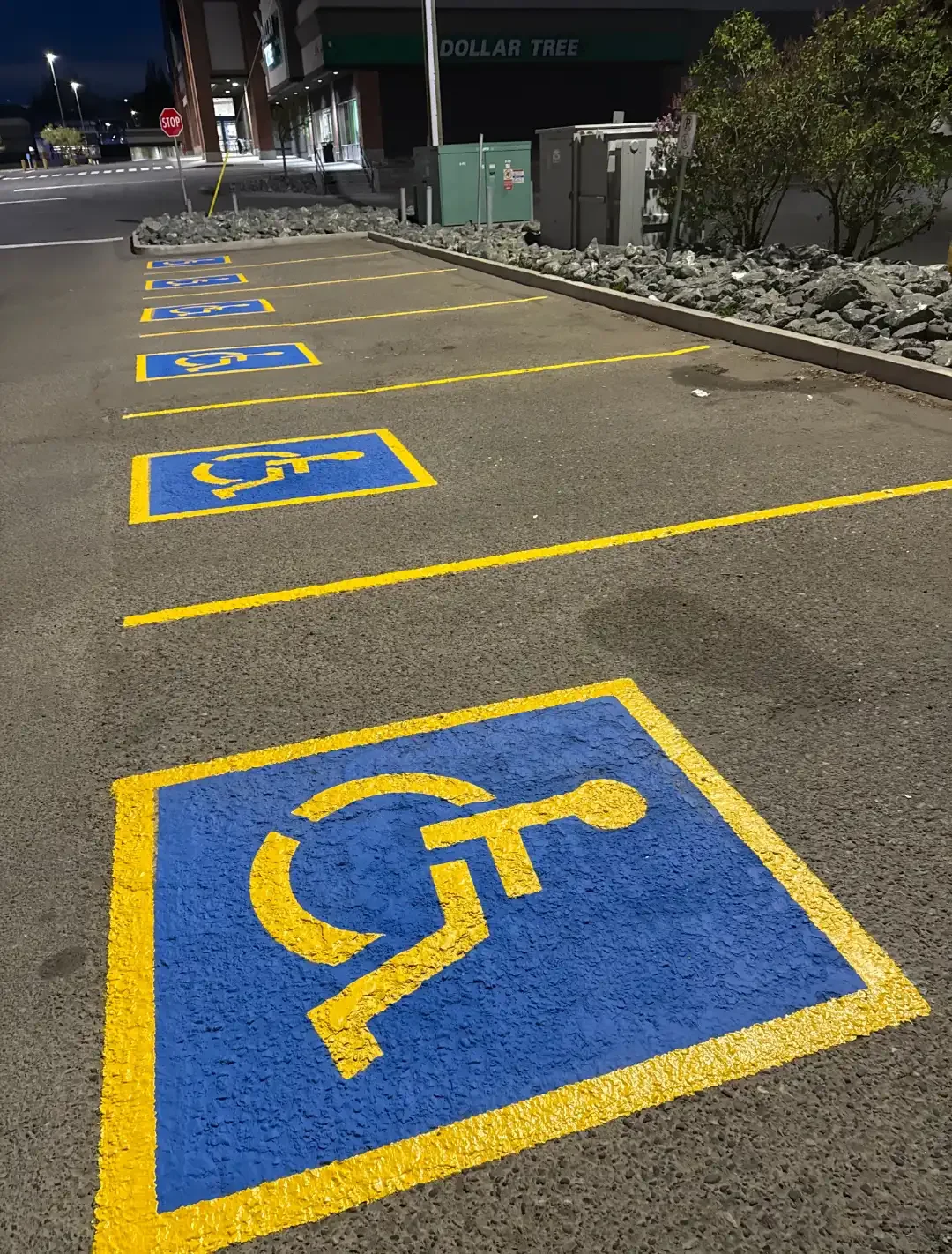
The buried stuff. Curbs, concrete wheel stops, light pole bases, sprinkler heads, drainage grates, decorative planters, the outside corners of accessible parking pads. All of it disappears under the first storm. Stakes or markers ahead of time save thousands of dollars in equipment damage and prevent a plow from catching what it shouldn't.
Snow storage zones. Where does plowed snow go on this site? Identify perimeter areas that can absorb snow without blocking exits, hydrants, dumpster pads, accessible stalls, or drainage routes. The corners of the lot that get afternoon sun melt faster — use them. The corners that don't — avoid.
Priority surfaces. Front-of-building entrances, accessible parking stalls and access aisles, loading docks, customer-facing drive lanes get cleared first. Less-trafficked back areas come later in the cycle. We write this down. It avoids 5 a.m. confusion on the Tuesday after the first big storm.
Sidewalk scope. The four-day rule under Bylaw 8425 applies to footpaths and sidewalks on and adjoining the property — including the public sidewalk fronting the building. Make sure those are explicitly in your snow contract scope, not assumed.
Dispatch protocol. Who calls whom. Does the contractor monitor the forecast and self-deploy, or is it on the property to request service? Does deployment happen during a storm or after it ends? Having that answer in November removes a lot of friction in February.
Hauling triggers. When do we recommend hauling for this specific property? Looks different for a 30-stall lot and a 200-stall lot and a multi-tenant industrial site. Defining triggers up front means hauling doesn't become an emergency conversation in late January.
If your current contractor has never had this conversation with you, that's worth knowing.
A note for residential property owners:
Most of what's above applies, just at a smaller scale.
Residential snow removal in Prince George is usually a driveway, a walkway, and the public sidewalk fronting the property. The same Bylaw 8425 four-day rule applies — homeowners are obligated to clear the sidewalk adjoining their property within four days of snow or ice accumulating. The same plowing-vs-sanding logic applies — even a cleared driveway can polish into a hazard after a freeze-thaw. The same booking advice applies — book before November or you'll be calling around the first week of December trying to find someone with capacity.
What's different for residential:
Hauling rarely matters. A driveway-sized perimeter usually absorbs a winter's worth of snow without trouble. It's the rare residential site that needs hauling.
Per-event service often makes sense. A homeowner with a fit body and a snow blower can absorb missed days that a commercial property can't.
Liability looks different but isn't zero. A slip-and-fall on a homeowner's sidewalk is still actionable, particularly if the four-day rule wasn't followed. Insurance carriers know this.
For homeowners, the single most useful thing you can do is decide before December which storms you'll handle yourself and which you'll outsource — and arrange for a contractor on retainer for the storms you won't. Trying to find help mid-blizzard rarely works out.
How Epic Pavement works
We're a small, locally-owned operation based in Prince George. Our founder, Dennis Kuebler, built the company on a simple principle: do solid work, treat customers well, build something people can rely on. His background as a certified mechanic shapes how we run equipment and how we maintain it through a season — a snow program is only as reliable as the gear behind it, and the gear is only as reliable as how it's serviced.
For snow removal specifically, that means:
We run pre-season site walks with every commercial client we sign
We define triggers, response times, scope, and dispatch protocols in writing before we start
We treat plowing and sanding as one operation, not two
We tell you when to add hauling, not after you needed it
And we pick up the phone at 5 a.m.
If you're sorting out your winter coverage for the upcoming season, get in touch. We'll come walk your site, talk through your priority surfaces, and put a contract structure in front of you that fits the property — not a template.
Request a free quote at epicpavement.ca/snow-removal-prince-george-bc, call (250) 617-8289, or email info@epicpavement.ca.
Frequently asked questions
-
By September or October. Quality contractors fill their commercial calendar before the snow starts, and the properties that book early are the properties that get prioritized when the first big storm hits. Calling around in late November is doable. Calling around after the first storm is a hard week.
-
Yes. Under Section 8(2) of Bylaw 8425, every property owner or occupier — commercial or residential — must remove snow and ice from sidewalks adjoining their property within four days of accumulation. Maximum fine under Section 22 is up to $10,000 per offence, with each day a separate offence.
-
Yes. Most of our work is commercial — parking lots, multi-tenant buildings, retail, industrial sites — but we take residential clients in Prince George as well, particularly clients on retainer through the season.
-
Sanding adds traction by giving tires and shoes something abrasive to grip. Salting actually melts ice through a chemical reaction. Salt's effective range is roughly above -7°C — Prince George spends meaningful portions of the winter below that, which is why sand and sand-salt mixes do most of the heavy lifting here, with straight salt selectively. A properly designed program uses both depending on the conditions.
-
The property loses usable space as banks grow into stalls and drive lanes, sightlines deteriorate at exits, and meltwater management gets harder in March. On most commercial properties in Prince George, hauling ends up being a once- or twice-a-season operation rather than a recurring weekly service — but skipping it entirely on a high-snow year tends to cost more in operational disruption than the hauling would have.
-
Depends on the contract structure, the storm size, and the priority order across the morning's properties. The right question to ask before signing is what the trigger threshold and target response time are for your specific site. For reference, the City targets 48 hours to clear Priority 1 and 2 routes after snowfall ends — private contractors operating on commercial properties typically work to faster targets within their contracted scope.
-
Yes. Equipment scales to the job — skid steer-based plowing for tight commercial lots and driveways, loader-and-truck for hauling, hand crews for stairs and entrances.
-
For a commercial site, the question isn't really "is it worth it" — it's "what's it worth not to have a slip-and-fall claim, an unhappy tenant, or a Tuesday morning where customers can't get into the lot." WorkSafeBC's data on the cost of slip-and-fall claims in BC frames the math for any commercial property owner who's been on the wrong side of one.
Snow and freeze-thaw cycles are hard on asphalt. If your pavement has cracks, potholes, or surface damage after winter, our Asphalt Repair and Crack Filling can help. Spring prep also means Parking Lot Sweeping and Parking Lot Line Painting — both of which we handle.
Local resources and sources
For property owners and managers who want to dig further:
City of Prince George — Snow Clearing — official priority system, snow event thresholds, ice control practices, winter parking restrictions
City of Prince George — Snow Clearing Map — interactive map showing priority colour for any street in the city
City of Prince George — Property Maintenance Bylaw No. 8425 (PDF) — full bylaw text, including Section 8(2) on sidewalk snow and ice removal obligations
City of Prince George — Commonly Requested Bylaws — full bylaw library
City of Prince George — Extreme Cold Resources — useful during deep cold-snap stretches
City of Prince George — Good Neighbour Guide — overview of common bylaw obligations for property owners
DriveBC — provincial road condition and closure information
Environment and Climate Change Canada — Climate Normals — official temperature, precipitation, and snowfall data for the Prince George A station
WorkSafeBC — Slips, trips, and falls — the source of the BC slip-and-fall cost and frequency data referenced in this article
Prince George Citizen — local newspaper coverage of weather events and city operations
CBC News — Prince George heavy snowfall coverage — operational reporting on the February 2023 heavy snowfall stretch referenced in this article
Other Insights From Us